Flatbed Hire Derry
Call +44 20 8154 5320

Derry flatbed and dropside self-drive hire

Flatbed and dropside hire in Derry, planned from the drop point back

Open-bed hire in Derry goes smoothly when the plan starts at the drop point. Check who controls the kerb, whether a permit applies to the actual vehicle, how long and heavy the load is, and what each driver's licence covers, then confirm the terms with the provider in writing.

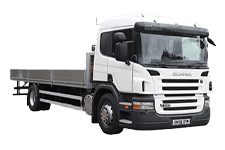
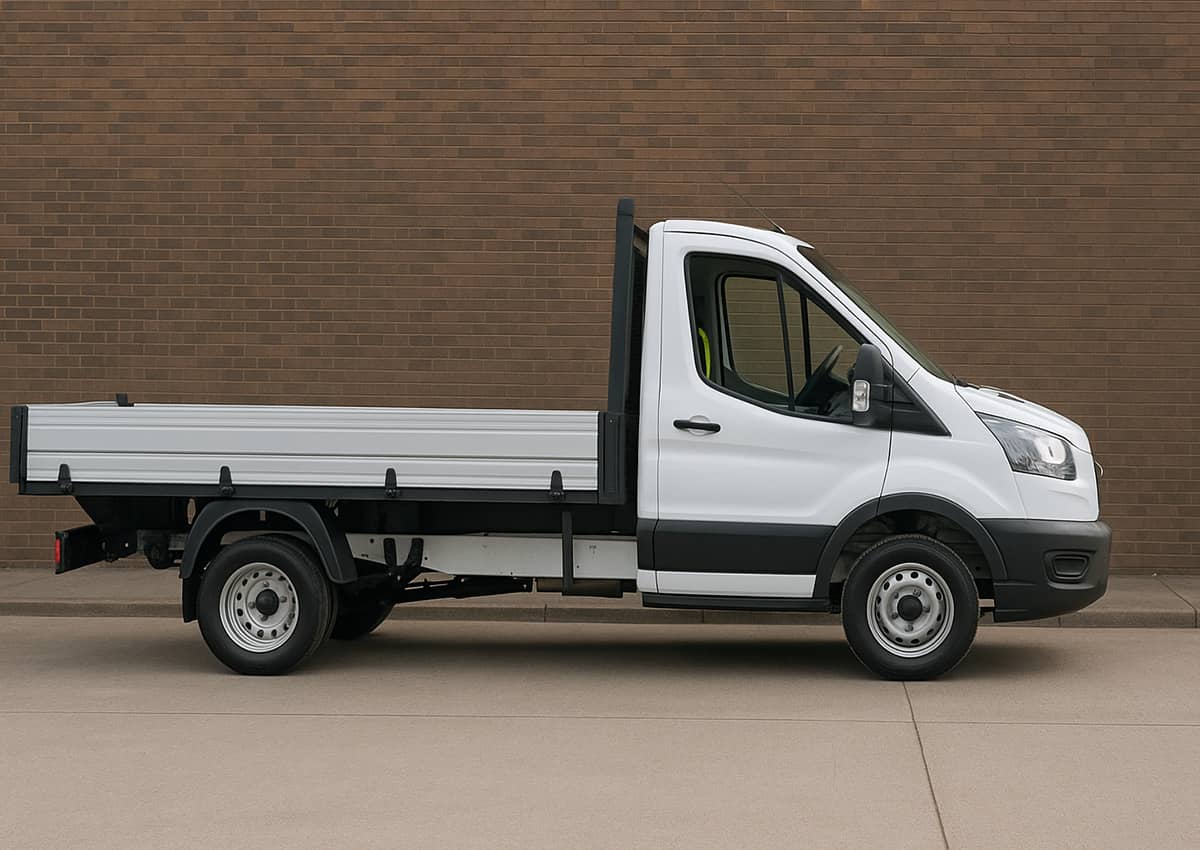
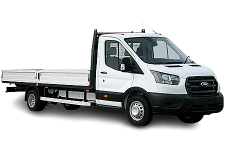
Representative flatbed truck; allocated vehicle must be confirmed

Speak to the flatbed booking team

+44 20 8154 5320

Choose from the load, not the badge

Flatbed and dropside options for Derry

These are representative vehicle categories. Weight class is not cargo payload: the allocated vehicle’s actual payload, bed dimensions, equipment, driver requirements and availability must all be confirmed before booking.

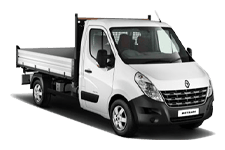
3 metre dropside van hire category

Flatbed and dropside category

3 metre dropside van

A compact open-bed category with folding sides for trade loads and sites where a larger lorry would be awkward.

  • timber, fencing and boards
  • bagged or palletised materials
  • tools and smaller machinery
Cargo payload
1100 kg (representative)
Bed length
3 m (representative)

The published 1,100 kg figure is representative only. Confirm the allocated vehicle's payload, bed width and load restraint.

Enquire about this vehicle
4 metre dropside van hire category

Flatbed and dropside category

4 metre dropside van

A longer open-bed category for loads that need more deck length or side access than the shorter dropside.

  • long timber and pipe
  • palletised site supplies
  • event and landscaping materials
Bed length
4 m (representative)
Bed width
2 m (representative)

Published dimensions are representative. Confirm actual payload, body dimensions and overhang rules before booking.

Enquire about this vehicle
Dropside with tail lift hire category

Flatbed and dropside category

Dropside with tail lift

An open-bed option to discuss when a suitable tail lift may help with palletised or wheeled goods.

  • palletised loads
  • wheeled equipment
  • destinations without a loading dock
Bed length
4 m (representative)
Bed width
2 m (representative)

Tail-lift capacity is not vehicle payload. Confirm both figures, platform size, pallet-truck use and unloading surface.

Enquire about this vehicle
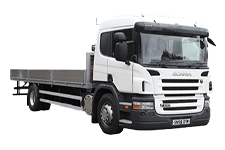
7.5 tonne dropside lorry hire category

Flatbed and dropside category

7.5 tonne dropside lorry

A larger dropside category for longer, heavier or multi-pallet loads when the route, driver and unloading plan suit a lorry.

  • scaffolding and pipe
  • multiple pallets
  • larger machinery and site supplies
Gross weight class
7.5 tonnes gross vehicle weight
Bed length
6 m (representative)
Bed width
2.35 m (representative)

C1 entitlement and possible commercial-use requirements apply. Confirm actual payload, bed dimensions and operating conditions.

Enquire about this vehicle
Phone-led matching
Discuss the load, route, access, driver and dates before a category is proposed.
Booking confirmation
Availability and final terms are confirmed during the booking process.
Address-level checks
Delivery and collection depend on the exact postcode, access and safe standing space.
Terms kept visible
Mileage, insurance, deposits and permitted use vary and must be checked for the hire.

Planning flatbed hire in Derry

Hiring an open-bed vehicle in Derry works best when you start at the place the load is going, not where it is coming from. A dropside that looks ideal on a booking page can still be wrong if the receiving street has nowhere lawful to stand, if the deck is too short for your lengths, or if nobody at the far end can lift a pallet off safely. This guide is for householders, trades and commercial users who want to make that choice properly.

It covers who controls street parking and pedestrian zones in the city, how to treat a merchant collection, how to compare deck sizes, and which licence and weight checks apply in Northern Ireland. It does not promise that any vehicle is available locally. Before you commit, ask the provider you intend to use whether hire for a Northern Ireland job can be arranged, and get the allocated vehicle's details in writing.

Start with the receiving address and who controls the kerb

Before choosing a vehicle size, look at the delivery point, in person or on recent street imagery, and decide exactly where the vehicle will stop while it is unloaded. Derry City and Strabane District Council's parking pages state that on-street parking is the responsibility of the Department for Infrastructure. Questions about standing on a public road, loading restrictions or yellow lines therefore belong with DfI, not the council.

Council car parks are a separate matter with their own conditions; the council's parking service lists an address at 98 Strand Road. Do not assume a car park bay can double as a loading space for a long open-bed vehicle with a side lowered. For a private yard or driveway, measure the entrance width, look for low cables and branches, and check the surface will take a loaded vehicle.

Sources: Derry City and Strabane Council: parking responsibilities

Pedestrian zone permits follow the vehicle, not the driver

If the drop point is inside a pedestrian zone, the position is stricter than on an ordinary street. NI Direct explains that permits are issued to specific vehicles only, so a permit held for your own van will not follow you into a hired dropside. You need the allocated registration before an application can be considered, and eligibility is not automatic.

Holding a permit also does not mean you can park in the zone; access and standing are separate questions. NI Direct routes Londonderry permit enquiries to the Department for Infrastructure's Western Division, so make contact early with the registration, address, reason and timing. On the day, read the signs at the entry point, and agree beforehand where the vehicle can lawfully wait while goods come off.

Sources: NI Direct: pedestrian-zone permits

Using a Strand Road merchant collection as a planning example

Many trade hires start at a builders' merchant. As a planning example, JP Corry publishes its Derry branch at 177 Strand Road, BT48 7PU. A published address tells you where to go and nothing more: it says nothing about stock, yard access for a lorry or how goods are handed over.

Ring the branch before booking the vehicle and ask for the total mass of the order including pallets and packaging, the longest item, whether goods come banded, and whether staff load by forklift or by hand. Ask where they want the vehicle positioned and whether a side can be dropped in their loading area. Those answers settle deck length, payload margin and restraint far more reliably than a product list.

Sources: JP Corry: published branch directory

Choosing deck length, payload and a tail lift

Representative categories run from a 3 metre dropside van, through a 4 metre version with a deck around 2 metres wide, to a 7.5 tonne dropside lorry with a bed of roughly 6 metres. A shorter deck is easier to place on a tight terrace; a longer one cuts overhang on timber, pipe and fencing panels. Size the deck to the longest item plus room to strap it, not to total volume.

More payload is a real benefit, but only within conditions. Maximum authorised mass, also called gross vehicle weight, is the plated legal limit for the loaded vehicle; usable payload is what remains after the vehicle, fuel, driver and passengers. A published figure such as 1,100 kg for a compact dropside is representative, so check the plate on the vehicle you are given.

A tail lift helps with pallets and wheeled kit where there is no dock, yet its lifting rating is separate from payload. Confirm both, the platform size and whether the drop point is level enough for a pallet truck.

Sources: Nationwide Hire UK: 3 metre dropside, Nationwide Hire UK: 4 metre dropside, Nationwide Hire UK: dropside with tail lift, Nationwide Hire UK: 7.5 tonne dropside, GOV.UK: vehicle weights explained

Licence categories for Northern Ireland drivers

NI Direct describes ordinary category B as covering a motor vehicle with a maximum authorised mass up to 3,500 kg and no more than eight passenger seats. Most compact dropside vans sit in that bracket, but read the plate rather than the model name. Category C1 covers vehicles between 3,500 kg and 7,500 kg, where a 7.5 tonne dropside lorry falls.

These are weight bands for the whole vehicle, not cargo allowances. Each named driver should check the categories and restrictions on their own current licence, and the provider may add age or experience conditions. Do not assume that exceptions available in Great Britain, for instance for some zero-emission vans or towing, apply in Northern Ireland; raise any unusual case with the provider before booking.

Sources: NI Direct: category B vehicle entitlement, NI Direct: category C1 vehicle entitlement, GOV.UK: driving licence categories

Restraint, overhang and lowering the sides safely

DVSA guidance says a load must be secured for the journey and cannot rely on its own weight or friction to stay put. On an open deck, use rated straps or chains to proper anchorage points, never to rope hooks or sheeting rails, with friction matting and chocks where items could slide or roll. Ask what restraint comes with the vehicle rather than assuming any does.

Before lowering a side, check nothing has shifted against it in transit. Stand clear of its swing, lower it under control and never use it as a step. Lengths projecting beyond the body may need marking and, beyond certain projections, advance notice, so measure the overhang and check current official guidance for that load.

Sources: DVSA: securing loads on HGVs and goods vehicles, DVSA: load securing basics, DVSA: ways to secure a load, DVSA and DfT: overhanging loads on vehicles

Unloading at the far end and carrying distance

HSE advice is to unload on clear, level ground with the vehicle as stable as possible and the arrangements agreed in advance. At a house or small site, that means knowing who will receive the goods, what equipment they have and how far each item must be carried. A long carry from kerb to back garden can matter more than deck size and may make extra hands a better investment than a bigger vehicle.

On multi-drop runs, removing part of a load can push weight onto one axle. Redistribute and re-secure after each stop, and use a weighbridge if you are unsure of gross or axle weights, particularly on the heavier lorry categories.

Sources: HSE: safe loading and unloading, DVSA: HGV overloading basics

Hire terms to confirm with the provider

Hire terms differ between suppliers, so treat any published conditions as a list of questions rather than a promise. Confirm in writing whether a Northern Ireland hire can be arranged, where collection and return take place, the deposit, mileage allowance, insurance excess, driver age limits and charges for late return or deck damage.

Ask directly whether the vehicle may be taken outside Northern Ireland during the hire instead of assuming it can. Request the allocated registration as early as possible, since you need it for any permit application and to compare the plate with your planned load.

Sources: Third-party reference: Nationwide Hire UK terms and conditions
Full truck range

Other vehicles to ask about

If an open-bed flatbed is not the right body type, the booking team can discuss these adjacent commercial categories. Every card is an enquiry category rather than a promise that a particular model is locally stocked.

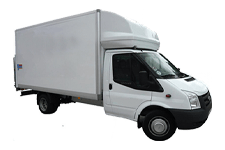
3.5 tonne Luton box with tail lift hire category

Other vehicle category

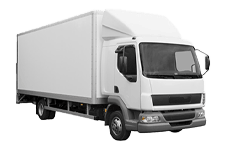
3.5 tonne Luton box with tail lift

Enclosed box-body category for bulky removals and deliveries where weather protection and assisted loading matter.

Confirm internal dimensions, payload and tail-lift capacity for the allocated vehicle.

Enquire about this vehicle
3.5 tonne tipper Transit hire category

Other vehicle category

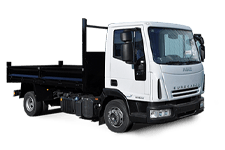
3.5 tonne tipper Transit

Compact tipping-body category for suitable loose materials and site work.

Waste carriage, destination acceptance, payload and tipping conditions must be confirmed.

Enquire about this vehicle
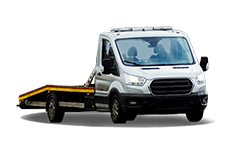
3.5 tonne recovery truck hire category

Other vehicle category

3.5 tonne recovery truck

Vehicle-transport category with a recovery bed and winch, subject to the carried vehicle's measured weight.

Confirm recovery use, bed rating, carried vehicle weight, licence and insurance before booking.

Enquire about this vehicle
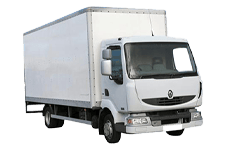
7.5 tonne box truck with tail lift hire category

Other vehicle category

7.5 tonne box truck with tail lift

Larger enclosed-body category for commercial deliveries and removals with assisted loading.

Confirm C1 entitlement, payload, internal body dimensions and tail-lift capacity.

Enquire about this vehicle
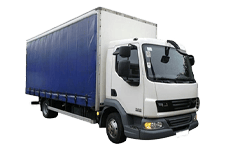
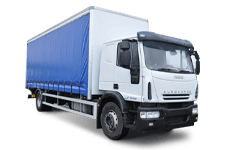
7.5 tonne curtainside truck hire category

Other vehicle category

7.5 tonne curtainside truck

Curtainside body for side access to palletised goods while retaining weather protection.

Confirm C1 entitlement, payload, curtain/body dimensions and load restraint.

Enquire about this vehicle
7.5 tonne dropside truck hire category

Other vehicle category

7.5 tonne dropside truck

Open-sided lorry category for bulky building materials, timber and machinery.

Confirm C1 entitlement, actual payload, bed dimensions, route and unloading method.

Enquire about this vehicle
7.5 tonne tipper truck hire category

Other vehicle category

7.5 tonne tipper truck

Larger tipping-body category for appropriate aggregates, soil and site materials.

Confirm C1 entitlement, operator position, payload, waste rules and tipping-site conditions.

Enquire about this vehicle
7.5 tonne sleeper tail-lift truck hire category

Other vehicle category

7.5 tonne sleeper tail-lift truck

Longer-distance box or delivery category combining a sleeper cab and tail lift.

Confirm body type, sleeper provision, payload, tail-lift capacity and driver requirements.

Enquire about this vehicle
18 tonne box truck hire category

Other vehicle category

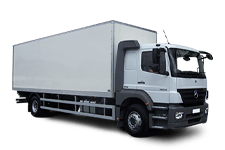
18 tonne box truck

Heavy enclosed-body category for larger commercial transport and distribution requirements.

Specialist heavy-vehicle licensing, operator, insurance and availability checks apply.

Enquire about this vehicle
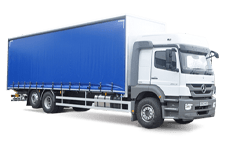
18 tonne curtainside truck hire category

Other vehicle category

18 tonne curtainside truck

Heavy curtainside category for larger palletised or industrial loads needing side access.

Confirm payload, body dimensions, route restrictions and commercial operating requirements.

Enquire about this vehicle
26 tonne curtainside truck hire category

Other vehicle category

26 tonne curtainside truck

High-capacity rigid curtainside category for substantial commercial loads.

This is a specialist heavy-vehicle enquiry; confirm all operator, driver, route and payload conditions.

Enquire about this vehicle
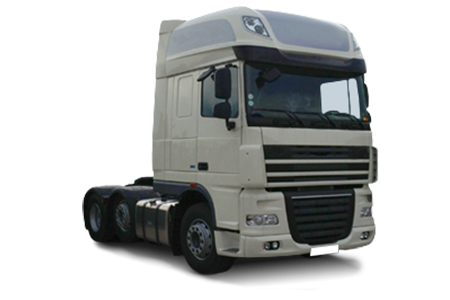
44 tonne articulated truck hire category

Other vehicle category

44 tonne articulated truck

Articulated heavy-goods category for specialist large-scale freight and long-distance commercial work.

Specialist operator, driver, site-access, route, insurance and load-planning requirements apply.

Enquire about this vehicle

Quote checklist

Have the whole job ready

A useful quote begins with the measured load and both ends of the journey.

Flatbed hire questions for Derry

Who do I ask about stopping on a Derry street to unload a dropside?

On-street parking in the city is the responsibility of the Department for Infrastructure, so questions about standing on a public road go to DfI. Council car parks follow separate rules and should not be treated as loading space.

Can I use an existing Derry pedestrian-zone permit with a hired dropside?

Not automatically. Permits are issued to specific vehicles, so a hired vehicle needs its own consideration using its registration. Even with a permit, you still need to agree where the vehicle can lawfully park while unloading.

Can I collect materials from a merchant on Strand Road with a hired dropside?

JP Corry publishes a branch at 177 Strand Road, BT48 7PU, but that address says nothing about stock or vehicle access. Call the branch to confirm the order, its mass and dimensions, and how and where they load.

Can I drive a 7.5 tonne dropside in Northern Ireland on a car licence?

Ordinary category B covers vehicles up to 3,500 kg maximum authorised mass. Vehicles between 3,500 kg and 7,500 kg fall under C1. Check the plate on the actual vehicle and the categories on each driver's own licence.

Is there a flatbed hire depot in Derry?

This page does not confirm a local depot or vehicle stock. Ask the provider directly whether a Northern Ireland hire can be arranged, where collection would take place and which terms apply before you rely on any vehicle.

Local sources and supporting guidance

Check current rules and the destination signs before travelling. Category specifications are examples, not allocated-vehicle guarantees.